What Should a 2-Year-Old Know Before Starting Preschool?
Is your 2-year-old getting ready to start preschool? If so, you may be wondering whether your child is ready—and whether there is a list of things they should already know before their first day.
The good news is that your 2-year-old does not need to know how to read, write, count to 20, or be completely independent before starting preschool. At this age, preschool readiness is much more about developing basic communication, social, physical, and independence skills.
Every child develops at their own pace. The goal isn’t to have a “perfectly prepared” 2-year-old. Instead, look for emerging skills that can help your child participate in a classroom environment and learn alongside other children.
What Should a 2-Year-Old Know Before Preschool?
A 2-year-old who is ready to begin preschool may be developing skills in several important areas. These include communication, following simple directions, social interaction, independence, physical coordination, and becoming comfortable with routines.
1. Basic Communication Skills
Communication is one of the most important skills for a toddler entering preschool.
Your child should be working toward communicating basic needs and wants. This might include using words, short phrases, gestures, or pointing to communicate.
According to the Centers for Disease Control and Prevention (CDC), common communication milestones by age 2 include saying at least two words together, pointing to things in a book when asked, pointing to body parts, and using a variety of gestures.
However, children develop language at different rates. A child who isn’t speaking as much as another 2-year-old may still be able to communicate effectively through gestures, sounds, and other forms of communication.
At preschool, teachers can continue encouraging language development through conversations, books, songs, stories, and everyday activities.
2. Following Simple Directions
Your child does not need to follow complicated instructions before starting preschool.
However, it is helpful if your toddler is beginning to understand simple directions such as:
- “Come here.”
- “Put the toy away.”
- “Sit at the table.”
- “Get your shoes.”
- “Let’s wash our hands.”
Following simple directions is a skill that develops over time. Preschool provides many natural opportunities for children to practice listening and responding to teachers.
The American Academy of Pediatrics also identifies following simple instructions as an important developmental skill around this age.
3. Beginning Social Skills
Two-year-olds are still learning how to interact with other children.
You should not expect your child to consistently share, take turns, or resolve conflicts independently. Those are skills they are still learning.
Instead, look for early social behaviors such as noticing other children, watching what they are doing, playing near other children, and showing interest in interacting with adults and peers.
The CDC notes that developmental milestones include social and emotional skills as well as language and physical development. By age 2, many children are beginning to notice when other people are upset and look to adults for cues about how to respond in unfamiliar situations.
A preschool classroom gives children regular opportunities to practice these skills in a supportive environment.
4. Some Independence
Your 2-year-old does not need to do everything independently before starting preschool.
But encouraging small amounts of independence at home can make the transition easier.
For example, your child can practice:
- Putting toys away
- Eating with a spoon
- Drinking from a cup
- Washing and drying hands with help
- Taking off simple clothing
- Helping put on shoes
- Carrying a backpack or personal item
- Choosing between two appropriate options
These everyday tasks help children develop confidence and a sense of independence.
5. Basic Physical Skills
A toddler entering preschool should have opportunities to practice age-appropriate movement and coordination.
By age 2, many children are running, kicking a ball, walking up a few stairs with or without help, and eating with a spoon. These are among the developmental milestones identified by the CDC’s 2-year-old milestone guidelines.
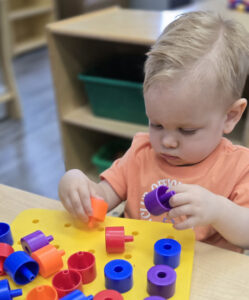
Fine-motor activities are important as well. Give your child opportunities to scribble with crayons, build with blocks, complete simple puzzles, turn pages in books, and manipulate age-appropriate toys.
These activities strengthen coordination while allowing children to learn through play.
6. Comfort With a Routine
One of the biggest adjustments when starting preschool is following a routine that is different from home.
You can help your child prepare by creating predictable routines around:
- Waking up
- Getting dressed
- Eating breakfast
- Leaving the house
- Nap or quiet time
- Meals and snacks
- Bedtime
Your child doesn’t need to follow a strict schedule. Simply knowing what comes next can help toddlers feel more secure.
Does a 2-Year-Old Need to Be Potty Trained for Preschool?
Not necessarily.
Potty-training requirements vary by State, so parents should always ask about the specific school’s policy before enrolling.
If your child is still learning to use the toilet, that does not automatically mean they aren’t ready for preschool. What matters is understanding the expectations of the program you are considering.
If you’re preparing your toddler for preschool, you may also want to read our article about potty training before preschool for additional tips.
What Should a 2-Year-Old Know Academically Before Preschool?
This is where many parents worry unnecessarily.
A 2-year-old does not need to know the alphabet, recognize every number, write their name, or memorize colors and shapes before starting preschool.
At this age, learning happens largely through play, conversation, movement, exploration, books, music, and hands-on activities.
Instead of drilling academic skills, parents can support early learning by:
- Reading together every day
- Singing songs and nursery rhymes
- Talking about what you see during everyday activities
- Counting objects naturally
- Building with blocks
- Drawing and coloring
- Completing simple puzzles
- Playing pretend
- Spending time outdoors
These simple activities build the foundation for future learning while keeping learning enjoyable.
How Can Parents Prepare a 2-Year-Old for Preschool?
The best preparation is usually simple and practical.
Talk positively about preschool. Read books about going to school. Visit the school before the first day if possible. Practice short periods of separation from parents with trusted adults. Let your child practice carrying a backpack and putting away toys.
Most importantly, avoid making your child feel as though they are being tested.
Starting preschool is a major transition. Your child is learning not only new concepts but also how to be part of a group, communicate with teachers, follow routines, and become more independent.
Remember: Preschool Readiness Looks Different for Every Child
There is no single checklist that determines whether every 2-year-old is ready for preschool.
The CDC’s developmental milestones are useful tools for understanding how children typically develop, but they are not a test that children must pass before entering preschool. The CDC explains that developmental milestones describe things that most children—75% or more—can do by a certain age.
If you have concerns about your child’s development, talk with your pediatrician and ask about developmental screening. The CDC also provides a free 2-year developmental milestone checklist that parents can complete and discuss with their child’s doctor or teacher.
A good preschool should meet children where they are and help them continue developing—not expect a 2-year-old to arrive already knowing everything.
Give Your 2-Year-Old a Strong Start at Grow and Learn Preschool
At Grow and Learn Preschool in Queen Creek, our age-appropriate programs give young children opportunities to develop communication, independence, social skills, motor skills, and early learning skills in a supportive classroom environment.
Our Toddler Program is designed for young children who are beginning to explore their independence and learn through hands-on experiences. For children moving into our preschool classrooms, our Preschool & Pre-K Program provides opportunities to continue building the skills they need for future success.
If you’re considering preschool for your 2-year-old, contact Grow and Learn Preschool to learn more about our programs or schedule a tour.
Frequently Asked Questions About 2-Year-Old Preschool Readiness
Many 2-year-olds are ready to begin a preschool or toddler program, even if they are still developing important skills. Look for emerging communication, social, physical, and independence skills rather than expecting your child to be completely independent.
A 2-year-old does not need advanced academic knowledge before preschool. It is more helpful for children to be developing basic communication, following simple directions, interacting with others, participating in routines, and practicing age-appropriate independence.
Not necessarily. Potty-training policies vary between preschool programs and are defined by State Licensing agencies. Ask the school about its specific requirements before enrolling.
Focus on everyday skills rather than formal academics. Reading together, talking, singing, practicing simple directions, cleaning up toys, using utensils, washing hands, and encouraging independent choices are all excellent ways to prepare your toddler for preschool.
alk positively about school, establish predictable routines, practice short separations, visit the school beforehand if possible, and give your child time to adjust. It is normal for some children to need several days or weeks to become comfortable with a new classroom and routine.
Sources and additional information: