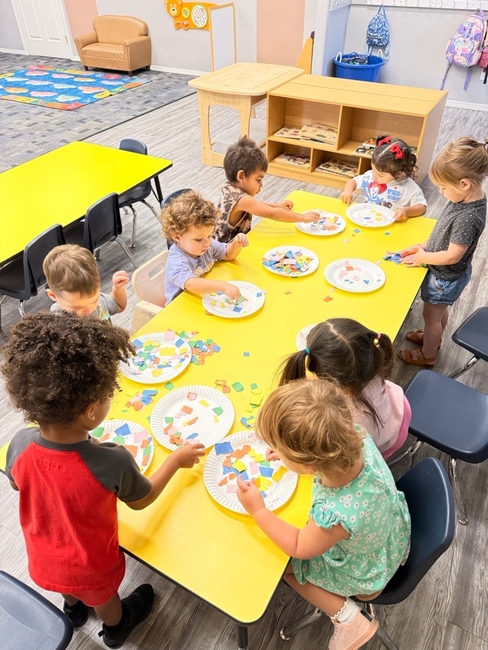
When parents think about preschool, they often focus on learning letters, numbers, colors, and preparing for kindergarten. But some of the most important lessons children learn in preschool have nothing to do with worksheets or academics. They involve learning how to make friends, communicate with others, share toys, take turns, and work together.
Social skills are an essential part of early childhood development. They help children build relationships, express their feelings, develop confidence, and navigate everyday situations. A quality preschool provides children with opportunities to practice these skills in a supportive, structured environment.
At Grow and Learn Preschool in Queen Creek, AZ, we believe developing social and emotional skills is just as important as building early academic foundations.
1. Learning How to Interact With Other Children
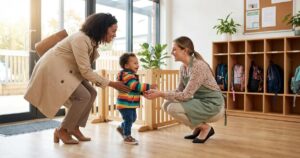
For many toddlers, preschool is one of their first regular opportunities to interact with children their own age outside their family.
At first, young children may prefer playing independently or alongside other children rather than directly with them. This is a normal part of development. As they grow, they gradually become more interested in interacting, participating in group activities, and developing friendships.
Preschool creates opportunities for children to:
- Introduce themselves and become familiar with other children.
- Participate in group activities and games.
- Communicate their needs and interests.
- Recognize and respond to other children’s feelings.
- Develop positive relationships with classmates and teachers.
According to the National Association for the Education of Young Children (NAEYC), social development is an important part of a quality preschool experience. Playing and learning together helps children build social skills, language skills, and self-control.
2. Understanding Sharing and Taking Turns
Sharing is not something most young children automatically know how to do. It is a skill that develops gradually through practice, guidance, and positive examples.
Toddlers may become upset when another child takes a toy they are playing with. Preschoolers may struggle with waiting for their turn or agreeing on which activity to play. These situations are normal learning opportunities.
In preschool, teachers help children understand concepts such as:
- Waiting patiently for a turn.
- Taking turns with popular toys and classroom materials.
- Asking politely to use something.
- Understanding that other children have feelings and needs.
- Working together rather than competing over every activity.
For example, when two children want to use the same toy, a teacher can help them find a solution by introducing a timer, suggesting an alternative activity, or explaining how they can take turns.
The goal is not simply to make children share. It is to help them understand cooperation, patience, and consideration for others.
3. Developing Communication and Listening Skills
Learning to communicate effectively is another important part of social development.
Children need opportunities to express what they want, explain how they feel, listen to others, and understand simple instructions. These abilities become increasingly important as children participate in group activities and develop friendships.
Preschool encourages communication through everyday experiences such as:
- Singing songs and participating in circle time.
- Listening to stories and answering questions.
- Talking with classmates during play.
- Asking teachers for help.
- Participating in group discussions and activities.
These interactions also help children develop vocabulary and confidence when speaking.
The Harvard University Center on the Developing Child explains how responsive, back-and-forth interactions between children and caring adults support early communication and social development.
4. Learning to Manage Emotions and Resolve Conflicts
Young children are still learning how to recognize and manage their emotions. Frustration, disappointment, excitement, and even jealousy can sometimes lead to challenging interactions.
Preschool provides a safe environment where children can begin learning how to handle these feelings appropriately.
With guidance from teachers, children gradually learn to:
- Identify and express their emotions.
- Use words instead of physical reactions.
- Understand that other children may feel differently.
- Calm down when something does not go their way.
- Work through disagreements with others.
Teachers play an important role by modeling positive behavior, acknowledging children’s feelings, and helping them find solutions.
NAEYC emphasizes that teachers can intentionally support social and emotional development by modeling positive behaviors, teaching appropriate responses, and helping children resolve conflicts.
These experiences help children develop the emotional awareness and self-control they will continue using throughout their lives.
5. Building Confidence and a Sense of Belonging
Starting preschool can be a big milestone. Children are introduced to new people, routines, activities, and expectations.
As they become more comfortable in their classroom, they often begin participating more confidently, approaching other children, and trying activities they may initially have avoided.
Positive interactions with classmates and consistent relationships with teachers help children develop a sense of belonging.
Small-group environments can be particularly beneficial because teachers have more opportunities to observe individual children, encourage participation, and provide support when needed.
At Grow and Learn Preschool, our small-group approach helps create an environment where children receive individualized attention while developing relationships with their classmates and teachers.
6. How Parents Can Reinforce Social Skills at Home
Social development does not stop when children leave preschool. Parents can reinforce these important lessons through simple everyday activities.
Here are five ways to encourage social skills at home:
- Practice taking turns: Play simple games that involve waiting and taking turns.
- Encourage communication: Ask children to explain what they want or how they feel.
- Read books together: Discuss characters’ feelings, friendships, and actions.
- Arrange play opportunities: Give children opportunities to interact with other children in supervised settings.
- Model positive behavior: Demonstrate patience, kindness, listening, and cooperation in everyday situations.
The Centers for Disease Control and Prevention (CDC) also provides helpful developmental milestone resources and suggestions for supporting children’s growth.
Remember that every child develops at a different pace. Some children are naturally outgoing, while others need more time and encouragement to feel comfortable in social situations.
Helping Children Grow at Grow and Learn Preschool
At Grow and Learn Preschool, we understand that early childhood education is about much more than preparing children academically for kindergarten. It is about helping them develop the skills, confidence, and independence they need to succeed in everyday life.
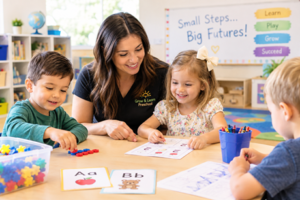
Our preschool curriculum incorporates social and emotional development, language and communication, hands-on activities, guided play, and opportunities to work with others.
For our youngest learners, our toddler program offers small classrooms with no more than six children, providing opportunities for individualized attention, early communication, and positive social interactions.
As children grow, they continue developing these skills through classroom activities, group learning, creative play, and everyday interactions with teachers and classmates.
Looking for a preschool in Queen Creek, Gilbert or San Tan Valley, AZ?
We would love to show you how Grow and Learn Preschool helps children learn, develop friendships, build confidence, and prepare for kindergarten.
Schedule a tour or call us at (480) 279-3155 to learn more about our programs for children ages 1–5.
Frequently Asked Questions
Children begin developing social skills from infancy, through interactions with parents, caregivers, and other children. Between ages 1 and 3, they gradually become more interested in interacting with peers, communicating their needs, and participating in simple group activities. Preschool provides additional opportunities to practice these skills in a supportive environment.
Yes! Preschool can help shy children gradually become more comfortable interacting with others. Through small-group activities, consistent routines, and encouragement from teachers, children can build confidence at their own pace. Smaller classroom environments can be particularly helpful because teachers have more opportunities to provide individualized attention.
Preschool teachers encourage sharing and turn-taking through everyday classroom activities, games, group projects, and guided play. When conflicts arise, teachers help children communicate, understand others’ feelings, and find solutions. These experiences allow children to practice patience, cooperation, and consideration for others.
Parents can encourage social development by arranging playdates, reading books about friendship, playing games that involve taking turns, encouraging children to express their feelings, and modeling kindness and patience. Everyday family interactions provide valuable opportunities for children to practice communication and cooperation.