If you’re looking for care for your young child, you may find yourself comparing preschool vs. daycare. While the two can seem similar at first, they often have different goals, schedules, and approaches to early childhood education.
Understanding the difference can help you choose the program that best fits your child’s age, developmental needs, and your family’s schedule.
What Is Daycare?
Daycare is primarily designed to provide supervision and care for children while parents are working or otherwise unavailable. Many daycare programs accept children from infancy through preschool age and may offer full-day care throughout the year.
Daycare can be a great option for families who need extended hours and consistent childcare. Depending on the program, children may participate in activities, outdoor play, meals, naps, and age-appropriate learning throughout the day.
The primary focus, however, is generally childcare and supervision, with learning activities incorporated into the daily routine.
What Is Preschool?
Preschool is an early childhood education program designed to prepare young children for their next stage of development and, eventually, kindergarten.
Preschool typically serves children between approximately 2 and 5 years old, although some programs begin accepting younger children. The day includes age-appropriate activities designed to support children’s development in areas such as:
- Early literacy and language
- Early math and problem-solving
- Social and emotional development
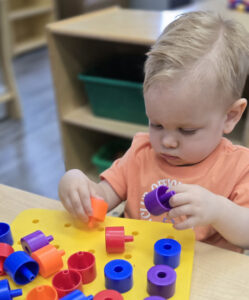
- Fine and gross motor skills
- Communication
- Independence and self-help skills
- Creativity and imagination
Preschool provides children with opportunities to learn while playing, exploring, interacting with their teachers, and developing relationships with other children.
Preschool vs. Daycare: The Main Difference
The biggest difference between preschool and daycare is the primary purpose of the program.
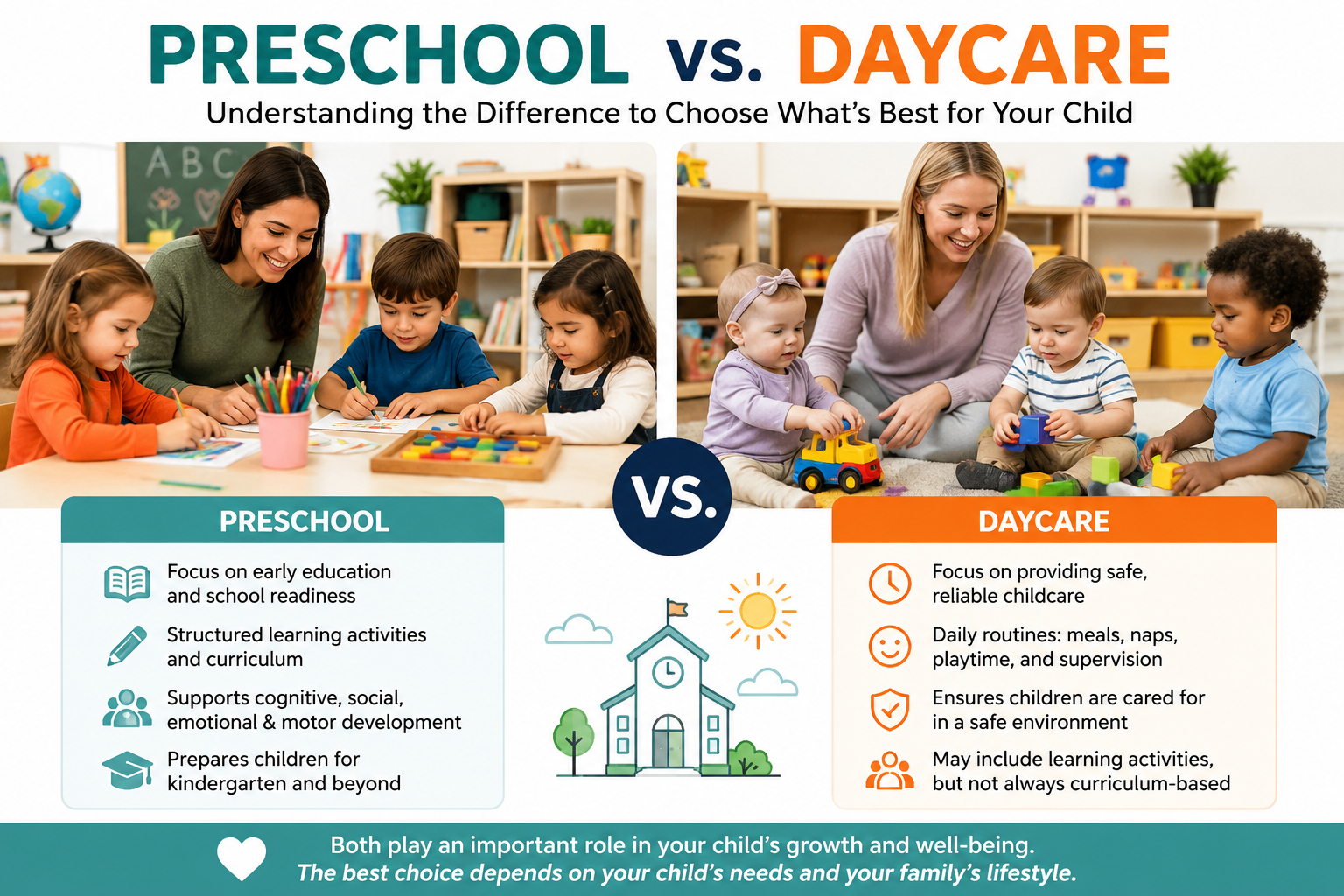
Daycare focuses primarily on providing reliable childcare, while preschool places a stronger emphasis on early education and developmental learning.
That doesn’t mean daycare doesn’t provide educational activities, or that preschool doesn’t provide childcare. In fact, there can be considerable overlap between the two.
The difference is often found in the structure, curriculum, and educational goals of the program.
| Preschool | Daycare |
| Primarily focused on early education | Primarily focused on childcare |
| Structured learning activities | Activities may be less academically structured |
| Curriculum based on developmental goals | Care routines are often the primary focus |
| Strong emphasis on kindergarten readiness | Focus on supervision, care, and daily routines |
| Often serves preschool-age children | May serve children from infancy through school age |
| May offer part-day or full-day programs | Often designed around full-day care |
It’s important to remember that every preschool and daycare is different. Some daycare centers have excellent educational programs, while some preschools offer very flexible childcare schedules.
Which Is Better for Your Child?
There isn’t one answer that works for every family.
If your primary need is full-day childcare for a young toddler, a daycare program may be the right choice.
If your child is approaching preschool age and you’re looking for a program that combines childcare with a structured early learning experience, preschool may be a better fit.
Many families also choose a preschool that offers full-day care. This can provide the convenience of daycare while giving children the benefits of a dedicated early education program.
When comparing programs, don’t focus only on whether a school calls itself a “preschool” or “daycare.” Instead, ask questions about what your child will actually experience each day.
Questions to Ask When Choosing a Preschool or Daycare
When touring a program, consider asking:
What does a typical day look like?
Ask how much time is spent on structured learning, free play, outdoor activities, meals, rest, and other routines.
Is there a curriculum?
A quality preschool should be able to explain what children are learning and how activities support their development.
What are the classroom sizes?
Smaller groups can allow teachers to provide more individual attention, particularly for younger children.
How are teachers interacting with the children?
Look for teachers who are engaged, responsive, encouraging, and actively involved in children’s learning and play.
How does the program prepare children for kindergarten?
Ask about early literacy, math, social skills, independence, communication, and other skills children will need as they enter kindergarten.
Does the schedule work for your family?
Even an excellent program isn’t the right fit if its hours don’t meet your family’s needs.
Preschool Can Be More Than Childcare
For many families, preschool is an important transition between being cared for at home and entering the more structured environment of elementary school.
Children are learning to follow routines, communicate with teachers and classmates, solve problems, become more independent, and develop the early academic skills they will eventually use in kindergarten.
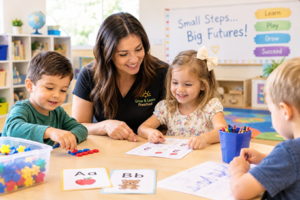
At Grow and Learn Preschool in Queen Creek, we combine early education with the practical needs of working families. Our programs are designed to provide children with a nurturing, structured environment where learning happens through developmentally appropriate activities, play, exploration, and positive relationships.
We serve children from toddlers through Pre-K, with programs designed around the developmental needs of each age group.
If you’re comparing preschool and daycare and aren’t sure which type of program is right for your child, visiting a few schools can be one of the best ways to make your decision. Seeing the classrooms, meeting the teachers, and learning about the daily routine can help you determine which environment feels like the right fit for your family.
Interested in learning more about preschool in Queen Creek? Contact Grow and Learn Preschool to schedule a tour and see our classrooms for yourself.