When parents search for the best preschool or early childhood program, they often focus on curriculum buzzwords: Montessori, Reggio Emilia, play-based, academic-based, and everything in between. While curriculum philosophy does matter, research and real-world classroom outcomes consistently show that small class sizes have a greater impact on a young child’s development than the specific curriculum being used.
In early childhood education, how children are taught—and how much individual attention they receive—often outweighs what is written in the lesson plan.
The Early Years Are Built on Relationships, Not Worksheets
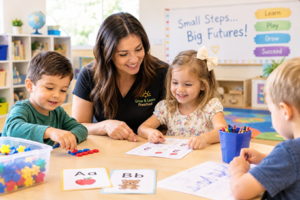
Children from birth to age five learn primarily through relationships and interactions, not structured academic instruction. Brain development during these years is rapid and highly responsive to social engagement.
According to the National Association for the Education of Young Children, responsive, consistent interactions with caregivers are one of the strongest predictors of positive early learning outcomes. Their research emphasizes that developmentally appropriate practice depends heavily on teacher-child relationships rather than rigid academic pacing.
A beautifully designed curriculum loses its effectiveness if a teacher cannot meaningfully engage with each child.
Small Class Sizes Enable Individualized Learning
Every child develops at a different pace. In a small class setting, teachers can:
- Observe each child’s strengths and challenges
- Adapt activities to individual learning styles
- Provide immediate feedback and encouragement
- Adjust expectations without pressure to “keep up”
Large class sizes often limit this flexibility. Research summarized by the Harvard Center on the Developing Child shows that responsive, individualized interactions significantly influence brain architecture in early childhood.
Individualized attention is the foundation of true learning in early childhood, and small classes make that possible.
Emotional Safety Drives Cognitive Growth
Young children cannot learn effectively if they do not feel emotionally safe. Smaller class sizes allow teachers to:
- Build stronger bonds with each child
- Notice subtle emotional cues
- Intervene early when a child feels overwhelmed or withdrawn
- Create predictable routines that reduce anxiety
Studies referenced by the Centers for Disease Control and Prevention highlight that safe, stable, nurturing relationships are essential for healthy brain development and long-term well-being.
No curriculum can compensate for a child who feels unseen or unheard.
Better Language Development Through Meaningful Interaction
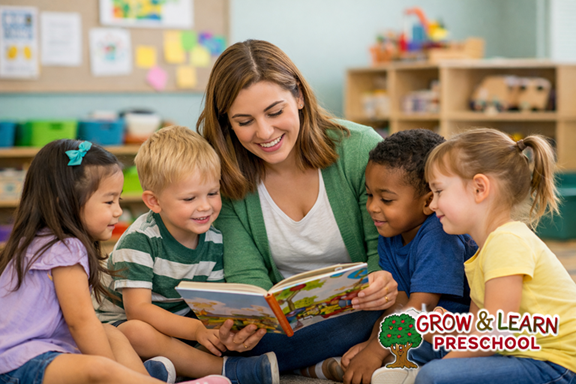
Language development is one of the most critical outcomes of early education. Children develop vocabulary and communication skills through back-and-forth conversation, not passive instruction.
Small class sizes increase:
- One-on-one conversations
- Open-ended questioning
- Storytime engagement
- Peer-to-peer dialogue facilitated by teachers
The American Academy of Pediatrics emphasizes that rich verbal interaction in early childhood supports literacy, emotional regulation, and later academic success.
Behavior Improves When Class Sizes Shrink
Challenging behaviors often increase in crowded environments. Noise levels rise, transitions take longer, and children compete for attention.
Smaller classes naturally lead to:
- Fewer behavioral disruptions
- More proactive guidance instead of reactive discipline
- Faster conflict resolution
- Stronger peer relationships
Research compiled by the Child Trends shows that lower child-to-teacher ratios are associated with improved classroom behavior and emotional outcomes.
Teacher Quality Thrives in Smaller Classrooms
Curriculum is only as effective as the educator delivering it. Small class sizes allow teachers to:
- Teach with intention instead of rushing
- Maintain emotional availability
- Reduce burnout and turnover
- Build long-term relationships with families
Lower teacher turnover supports consistency, which is critical in early childhood education. Stable caregivers foster trust, security, and deeper learning.
Curriculum Matters—but It’s Secondary
This does not mean curriculum is unimportant. A thoughtful curriculum provides structure, goals, and developmental alignment. However, curriculum should support relationships—not replace them.
The best outcomes occur when:
- A strong curriculum is delivered in small group settings
- Teachers have flexibility to follow children’s interests
- Learning is responsive, not rigid
- Social-emotional growth is valued alongside academics
In early childhood education, curriculum is the tool—small class size is the multiplier.
What Parents Should Look For When Choosing a Preschool
When touring early childhood programs, parents should ask:
- What is the teacher-to-child ratio?
- How many children are in each classroom?
- How does the school support individualized learning?
- How long do teachers typically stay with the program?
A preschool with small class sizes—even if its curriculum sounds less trendy—often delivers deeper learning, stronger emotional development, and better long-term outcomes.
Final Thoughts
In early childhood education, connection precedes instruction. Small class sizes create the conditions where children feel safe, supported, and seen—conditions that allow any curriculum to succeed.
While curriculum choices may shape what children learn, small class sizes shape how well they learn, how they feel about learning, and how confidently they grow.
When it comes to giving young children the strongest possible start, class size isn’t just a detail—it’s the difference maker.