Teaching your child to read before they enter kindergarten can set a strong foundation for academic success and instill a lifelong love of learning. While every child develops at their own pace, there are proven strategies parents can use at home to gently introduce reading skills in a fun, pressure-free way. The key is consistency, patience, and creating an environment that fosters curiosity about language and books.
Start with Phonemic Awareness
Phonemic awareness is the ability to hear, identify, and manipulate the individual sounds—called phonemes—in spoken words. This is a critical first step before a child can begin decoding words in print. You can build phonemic awareness through simple games and activities that don’t require any books. Try clapping out syllables in words, playing rhyming games, or saying a word slowly and asking your child what word it is. For example, say, “/c/… /a/… /t/,” and let your child guess “cat.” These games help kids develop an ear for the sounds that make up words, a key skill for early reading.
Make Reading Part of Daily Life
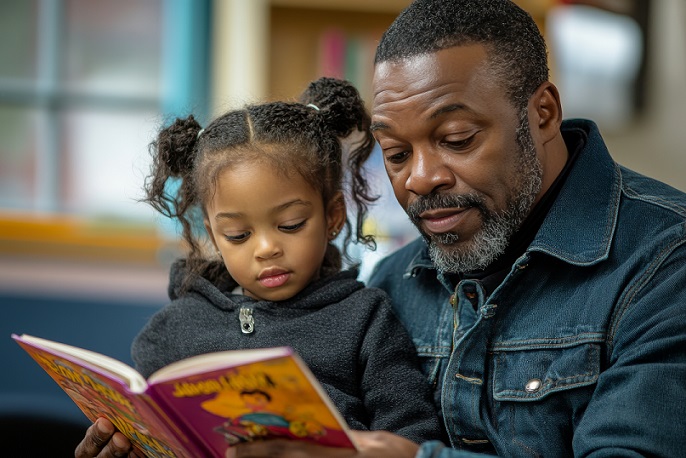
Reading to your child every day is one of the most important things you can do. Choose a variety of books—picture books, rhyming books, alphabet books, and simple stories—to keep their interest. Read with enthusiasm and point to the words as you say them. This helps children understand that words on a page represent spoken language. Ask questions during reading: “What do you think will happen next?” or “Why is the dog sad?” This builds comprehension skills while making reading a shared, interactive experience. Repetition also helps; young children enjoy hearing the same stories over and over, and repetition builds familiarity with sentence patterns, vocabulary, and story structure.
Teach Letter Recognition and Sounds
Introduce the alphabet gradually, focusing on both letter names and the sounds they make. Start with the letters in your child’s name, and move to others at a comfortable pace. Use alphabet puzzles, fridge magnets, or foam bath letters to make learning tactile and fun. When teaching a letter, emphasize its sound: “This is the letter B. B says /b/, like ‘ball.’” Reinforce letter-sound associations during everyday activities: “Look! Banana starts with B!”
Don’t worry if your child doesn’t pick up all the letters at once. What matters is repeated exposure and connecting letters to sounds and words in meaningful ways.
Use Phonics-Based Learning
Phonics involves teaching children how letters and combinations of letters represent the sounds of spoken language. Once your child knows a few letters and their sounds, begin blending them to make simple words, such as “cat,” “bat,” “mat,” and “hat.” Use letter tiles or write on a whiteboard to demonstrate how changing just one letter can make a new word.
There are many excellent early phonics books and programs designed to guide children through the stages of reading. Keep lessons short—just 5 to 10 minutes a day—and stay upbeat. If your child gets frustrated, pause and try again later.
Enroll Your Kid in a Preschool Program or Pre-K Program
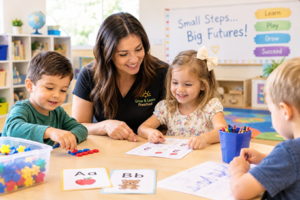
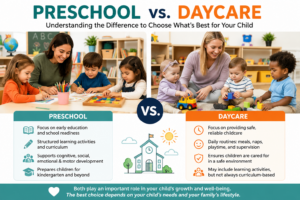
One of the most effective ways to support early reading development is by enrolling your child in a high-quality pre-kindergarten program. Preschool programs and Pre-K programs provide a structured learning environment where children are introduced to literacy skills in a social, play-based setting. Teachers use research-based methods to build vocabulary, phonological awareness, print knowledge, and listening comprehension.
Beyond academics, pre-K also supports social-emotional growth, which is essential for school readiness. Children learn to take turns, follow directions, and develop confidence—skills that contribute to reading success. Even part-time programs can offer valuable exposure to books, language, and peer interactions that reinforce what you’re doing at home.
At Grow and Learn Preschool, our preschool and pre-K teachers follow the Fundations® Curriculum as a structured literacy program to consistently teach reading skills through phonemic awareness, phonics, vocabulary, fluency, and comprehension.
Make Learning Interactive and Playful
Kids learn best when they’re engaged and having fun. Turn reading practice into games: go on a letter scavenger hunt, match uppercase and lowercase letters, or play simple word-building games using letter tiles or flashcards. Apps and online games designed for early literacy can also be helpful if used in moderation.
Songs and nursery rhymes are another great tool for teaching rhythm, rhyme, and sound patterns. Sing together in the car or before bedtime. Music helps make language memorable and enjoyable.
Model a Love of Reading
Children mimic what they see. Let your child see you reading—books, newspapers, recipes, or even emails. Talk about what you’re reading and why you enjoy it. Visit the library together and let your child choose books that interest them, even if they want the same one repeatedly.
Make reading a special time each day. Whether it’s before bed, after breakfast, or during quiet time, having a consistent reading routine helps children associate books with comfort and closeness.
Be Patient and Encouraging
Every child learns to read at a different pace. Avoid pressuring your child or comparing them to others. Celebrate small successes and keep the atmosphere light and positive. If your child is struggling with a particular concept, take a break and revisit it later in a different way. Reading is a journey, not a race.
Final Thoughts
Teaching your child to read before kindergarten doesn’t require fancy tools or formal lessons. It’s about making language and reading a natural, joyful part of everyday life. By combining phonemic awareness, letter recognition, reading aloud, and consistent encouragement — with a little help from a quality pre-K program like Grow and Learn Preschool — you can help your child develop the confidence and skills they need to thrive in school and beyond.