
Helping Children Thrive in Queen Creek & San Tan Valley, AZ
Language development plays a huge role in a child’s early learning journey. During the preschool years, children’s brains are like sponges — absorbing words, sounds, and meaning at an incredible pace. For many families in Queen Creek and San Tan Valley, AZ, this includes children growing up with more than one language at home.
Multilingualism is not just a gift — it’s a powerful tool that builds communication skills, cognitive abilities, and cultural identity. At Grow and Learn Preschool, we understand how important it is to support multilingual learners so they can thrive in the classroom and beyond.
This article explores how language develops in young children, why being multilingual is an advantage, and how both parents and educators can work together to support preschoolers in a bilingual or multilingual environment.
Why Language Development Matters in Preschool
The preschool years (ages 3–5) are a critical window for language growth. During this time, children:
- Rapidly expand their vocabulary.
- Start forming more complex sentences.
- Understand and follow multi-step directions.
- Engage in conversations and storytelling.
- Begin developing early literacy skills like rhyming, letter recognition, and sound awareness.
Strong language skills give children a head start in kindergarten and build confidence in social and academic settings. For multilingual children, these benefits are often amplified.
The Advantages of Raising Multilingual Learners
Many families in Queen Creek and San Tan Valley speak more than one language at home. Contrary to the myth that this can confuse children, research shows that multilingualism offers lasting benefits:
- Cognitive flexibility: Switching between languages strengthens the brain and improves problem-solving.
- Better communication skills: Children learn to express themselves clearly in different contexts.
- Cultural pride and connection: Language preserves family heritage and builds identity.
- Academic success: Bilingual children often develop strong reading and writing skills over time.
By nurturing multilingualism early, we give children the confidence to use their voice — in every language they know.
How Language Development Works for Multilingual Children
Language learning may look different for multilingual preschoolers compared to monolingual peers:
- They may mix languages in one sentence — this is called code-switching and it’s perfectly normal.
- Vocabulary may grow unevenly between languages.
- Some children experience a silent period, where they listen and observe before speaking in a new language.
These are all healthy signs of language development. With supportive teachers and families, multilingual children thrive academically and socially.
How Preschools Can Support Multilingual Learners
At Grow and Learn Preschool in Queen Creek, AZ, we create a warm, inclusive environment where language learning happens naturally through play, songs, and daily routines. Here are some strategies we use:
1. Building a Language-Rich Environment
Children learn best through meaningful interaction. Our teachers use:
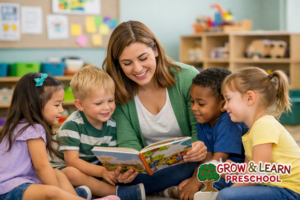
- Storytime and interactive reading
- Songs, rhymes, and repetition
- Visual aids and gestures to make meaning clear
2. Celebrating Every Language
When children hear their home language valued at school, they feel proud and confident. We integrate families’ languages into daily activities — from greetings to classroom signs and cultural celebrations.
3. Encouraging Communication Without Pressure
We never force children to speak right away. Multilingual learners may need time to process a new language. Participation through gestures, smiles, and movement is just as important in the early stages.
4. Repetition and Routine
Predictable classroom routines help multilingual children understand and remember language more easily. Repetition builds both confidence and comprehension.
How Parents Can Support Language Development at Home
Parents are the most important language teachers in a child’s life. Here are practical tips for families in Queen Creek and San Tan Valley to encourage strong language skills:
1. Speak Your Home Language Consistently
Children benefit from a strong foundation in their first language. Don’t be afraid to speak your native language at home — it actually strengthens their ability to learn English later.
2. Read Together Daily
Reading aloud is one of the most effective ways to build vocabulary and comprehension. Try a mix of books in both your home language and English. Ask open-ended questions and point out new words.
3. Make Language Fun and Natural
Talk to your child during everyday routines: cooking, driving, or walking to the park. These small conversations help language skills grow effortlessly.
4. Embrace Your Culture
Songs, stories, holidays, and traditions in your language give children pride in their heritage and make language learning meaningful.
Busting Common Myths About Multilingualism
- ❌ Myth: “Two languages will confuse my child.”
✅ Fact: Multilingual children can learn multiple languages at once without confusion. - ❌ Myth: “They should master English first.”
✅ Fact: A strong home language makes learning English easier. - ❌ Myth: “Quiet means they’re behind.”
✅ Fact: Silent periods are a normal part of language development.
Language Support at Grow and Learn Preschool
At Grow and Learn Preschool, we proudly serve families in Queen Creek and San Tan Valley, Arizona, creating a welcoming space where multilingual learners can grow with confidence.
Our teachers are trained to nurture language development in both English and home languages, using songs, stories, interactive play, and visual supports. We work hand-in-hand with parents to build a strong language foundation and prepare children for kindergarten and beyond.
Whether your child speaks one language or three, we’re here to celebrate their voice and help them shine.
Final Thoughts
Language is more than words — it’s how children connect, express themselves, and discover the world. Supporting multilingual learners in preschool isn’t just about teaching new vocabulary; it’s about valuing their culture, identity, and unique strengths.
By working together — educators, parents, and the community — we can give children the tools they need to thrive in any language.
Looking for a nurturing preschool that celebrates your child’s language and culture? Schedule a tour of Grow and Learn Preschool in Queen Creek, AZ today.